
About Us
Lorem ipsum dolor sit amet, consectetur adipiscing elit. Cras in fringilla turpis, eu consequat ante.

Donec Pellentesque

Donec Pellentesque
Keep Calm And Book Yourself A Holiday
Lorem ipsum dolor sit amet, consectetur adipiscing elit. Cras in fringilla turpis, eu consequat ante. Donec pellentesque, est non condimentum posuere, eros elit bibendum turpis, vel luctus elit erat in justo.

Keep Calm And Book
Yourself A Holiday
Lorem ipsum dolor sit amet, consectetur adipiscing elit. Cras in fringilla turpis, eu consequat ante. Donec pellentesque, est non condimentum posuere, eros elit bibendum turpis, vel luctus elit erat in justo. Integer ultrices dolor rutrum erat lacinia, ac tincidunt sapien viverra. Integer a ligula porttitor, porttitor nulla eu, laoreet erat. Etiam hendrerit consequat tellus. In ultrices porttitor luctus. Mauris at dolor id felis dictum commodo. Suspe
See Our Latest Blogs
Lorem ipsum dolor sit amet, consectetur
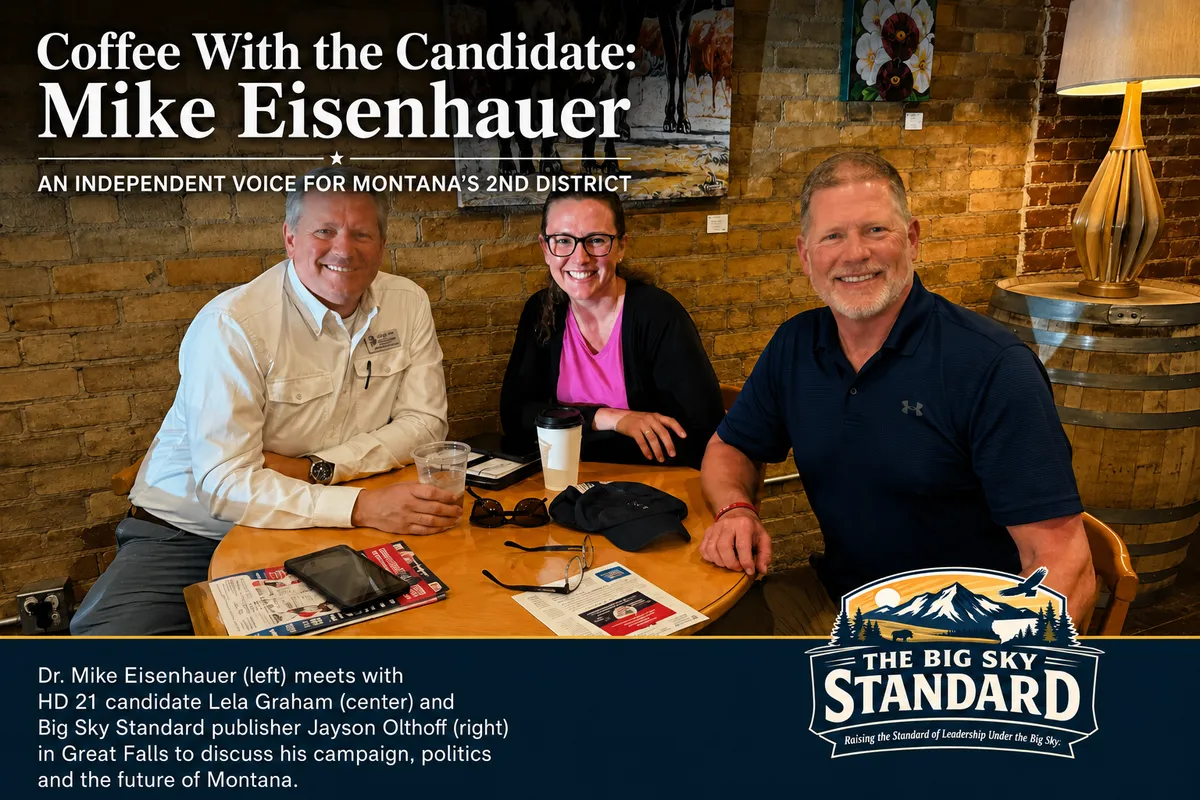
Coffee With the Candidate: Mike Eisenhauer Makes His Case for an Independent Voice in Montana
Coffee With the Candidate: Mike Eisenhauer Makes His Case for an Independent Voice in Montana
The Independent candidate for Montana’s 2nd Congressional District says Washington needs fewer party-line politicians and more people willing to sit down, listen and solve problems.
By Jayson Olthoff | The Big Sky Standard
Sometimes the best political conversations don’t happen behind a podium, at a rally or during a formal debate.
Sometimes they happen over a cup of coffee.
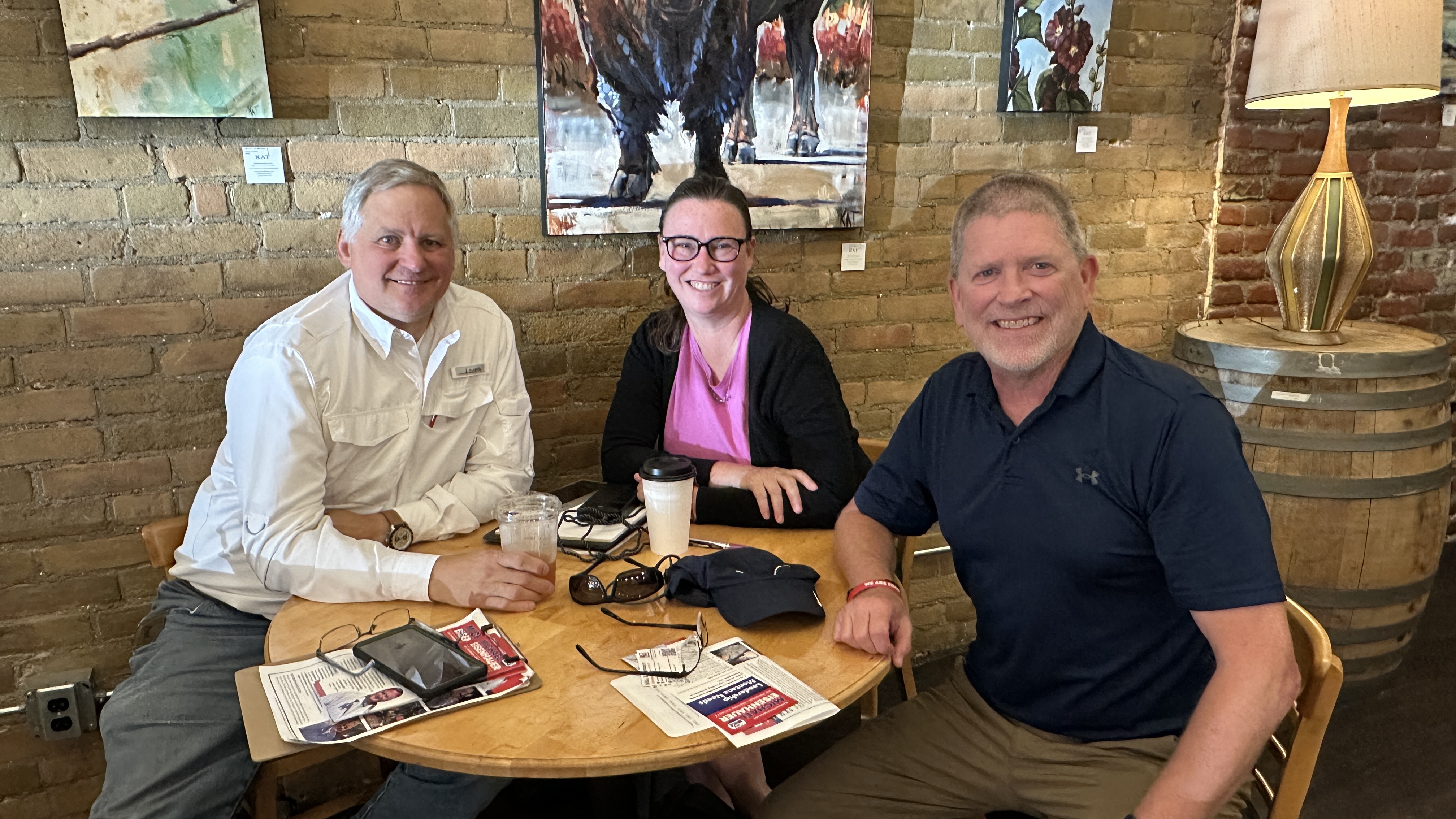
I recently sat down with Dr. Mike Eisenhauer, an Independent candidate for Montana’s 2nd Congressional District, for what was intended to be an introductory conversation ahead of a more extensive interview withThe Big Sky Standardin the coming weeks.
What followed was a wide-ranging discussion about political parties, rural healthcare, agriculture, affordability, military service and what Eisenhauer believes representation should look like in Washington.
And one theme kept coming back throughout our conversation:
Can someone represent Montana without first answering to a political party?
For Eisenhauer, that question is at the heart of his campaign.
Why Independent?
Eisenhauer is entering a race that currently includes incumbent Republican Rep. Troy Downing, Democrat Brian J. Miller and Libertarian Patrick McCracken. Current election guides list Eisenhauer as the Independent candidate in the race.
Unlike candidates chosen through a Republican or Democratic primary, Eisenhauer had another obstacle before voters could even consider him: ballot access.
His campaign says nearly 13,000 petition signatures were collected, enough to qualify him for the November 2026 general-election ballot.
That meant Eisenhauer largely missed something his opponents received automatically during the primary season: name recognition.
He acknowledged that challenge immediately.
For many voters, he said, his name simply wasn’t there when they first started paying attention to the congressional race.
But Eisenhauer also believes his Independent status is exactly what separates his campaign from the others.
His decision, he said, comes partly from a lifetime of looking at issues rather than political labels.
Eisenhauer spent nearly 25 years in the U.S. Army, retiring as a colonel, and built his civilian career as a cardiologist. His campaign biography says his military service included Baghdad, where he served as Deputy Forces Surgeon and Chief of Clinical Operations for MultiNational Forces-Iraq. He later practiced cardiology in Great Falls and traveled to communities including Helena, Chester, Shelby, Browning and Havre to provide cardiac care.
He said military service reinforced something that still shapes the way he thinks politically: identify the problem, determine what needs to be done and work with the people around you to accomplish the mission.
Party affiliation doesn’t fix the problem.
People do.
Eisenhauer said he became increasingly frustrated watching Congress struggle to compromise.
“If you see a problem, or if you see a gap in the line, so to speak, it’s your obligation to be willing to step forward and try something,” he told me.
Sitting on the sidelines and complaining wasn’t enough.
So he decided to run.
Not Caucusing With Either Party
I asked Eisenhauer directly what being an Independent would actually mean once he reached Washington.
After all, there are politicians who identify as Independents but caucus consistently with one of the two major parties.
Eisenhauer said that is not what he intends to do.
He told me he would not caucus with either party.
Instead, he said he wants to work issue by issue.
There will be issues where he finds greater agreement with Republicans and others where Democrats may have the stronger proposal. His argument is that an Independent representative should be able to listen to both without first asking which political team proposed the idea.
Eisenhauer imagines something bigger as well.
What happens, he asked, if a few Independents are joined by several Republicans and Democrats who are equally tired of the current environment?
Suddenly, there could be a bloc of lawmakers willing to work together without demanding ideological purity from one another.
“You’re not going to agree on everything,” he said.
But perhaps they could agree on 80 percent.
And then move something forward.
It is a markedly different view from the politics Americans have become accustomed to, where compromise can sometimes be treated as surrender.
Eisenhauer believes that culture is part of the problem.
Montana Before Party
Our conversation eventually turned to something much larger than Congress.
What has happened to our ability to disagree with one another?
There was a time when your neighbor’s political affiliation probably wasn’t the first thing you needed to know before helping pull his pickup out of a snowbank.
Today, politics can divide families, friendships and entire communities.
Social media has amplified it.
Algorithms show people more of what they already believe. Conversations become arguments. People become labels instead of neighbors.
Eisenhauer believes an Independent representative may have an opportunity to operate outside some of that environment.
His campaign summarizes the approach with three phrases:
“Break the Gridlock. Real Representation. Montana First.”
During our conversation, Eisenhauer repeatedly came back to the idea that his responsibility, if elected, would be to Montana rather than a national party structure.
That includes being willing to return home and explain his votes.
We talked about something I consider extremely important in representation: I don’t have to agree with every vote an elected official makes.
But I should be able to ask why.
And they should be able to explain it.
Eisenhauer agreed.
His philosophy is simple: if you cannot return to Montana and explain why you voted a certain way, perhaps you should reconsider whether you should cast that vote in the first place.
That doesn’t guarantee agreement.
It does create accountability.
Rural Healthcare Is Personal
If there was one subject where Eisenhauer’s professional background became immediately apparent, it was healthcare.
He is an interventional cardiologist who has spent years working with rural facilities across Montana, and rural healthcare is clearly going to be a significant part of his campaign.
His campaign platform identifies affordability, healthcare and veterans among his core issues, with specific emphasis on protecting rural healthcare.
Eisenhauer described what rural medicine looks like when you get outside Montana’s larger communities.
Sometimes a physician assistant or nurse practitioner may be holding down a small facility with limited resources. When a complicated cardiac patient arrives, that provider needs someone on the other end of the phone who understands both the medicine and the limitations of the facility.
Eisenhauer has been that physician.
Sometimes, he said, the answer was: “You can handle this.”
Other times, the answer was: send the patient.
The important part was having the system and relationships in place to make that decision quickly.
For someone experiencing a heart attack, geography matters.
A small-town hospital may not be able to provide every level of cardiac care, but it can begin treatment, obtain an EKG, stabilize the patient and communicate with specialists while transportation is arranged.
Without that facility, the alternative could be hours of travel before treatment even begins.
Eisenhauer also sees rural hospitals as something bigger than healthcare facilities.
They are often major employers.
They help make small communities livable.
A rancher considering retirement in the community where he spent his life may think differently if the nearest healthcare facility disappears.
Families may move.
School enrollment can decline.
Local businesses lose customers.
One closure can create a chain reaction.
“You lose the health care there,” Eisenhauer said, “then the local farmer or rancher wants to retire … and there’s no health care.”
To him, protecting rural healthcare is also about protecting rural Montana.
Affordability: No Easy Campaign Promise
When I asked Eisenhauer how he plans to address affordability—including housing, fuel, healthcare and the overall cost of living—his answer was notable because of what hedidn’tpromise.
He didn’t tell me he could fix it alone.
In fact, he said anyone walking into Congress claiming they alone can solve something that complicated probably isn’t being realistic.
Instead, Eisenhauer talked about building relationships first.
Learn the institution.
Learn the people.
Find lawmakers willing to work together.
Then start tackling pieces of the problem.
His campaign platform currently identifies housing, healthcare costs and broader household affordability as significant issues facing Montana families.
Eisenhauer approaches policymaking much like he approaches medicine.
A doctor develops a differential diagnosis, considers the available information, chooses a course of treatment—and then does something Eisenhauer believes government frequently fails to do:
Reassess.
Did the treatment work?
Did something unexpected happen?
Does the plan need to change?
Congress, he argued, has a tendency to pass legislation and move immediately to the next political battle without adequately examining whether the policy actually accomplished what lawmakers promised.
Eisenhauer wants more reassessment and less ideological attachment to a solution simply because one party proposed it.
Agriculture, Competition and Montana Producers
Agriculture was another major topic during our conversation.
Eisenhauer expressed concern about consolidation throughout agriculture—from seed companies to meat processing—and questioned whether additional antitrust enforcement should be part of the conversation.
When fewer companies control critical parts of the agricultural economy, he argued, Montana farmers and ranchers can lose leverage.
He also connected agriculture to foreign policy and tariffs.
Trade disputes may sound like Washington issues until they affect fertilizer costs, export markets, cattle prices or the price producers receive for their crops.
For Eisenhauer, that illustrates why complex problems rarely fit neatly into a Republican or Democratic box.
Agriculture policy becomes trade policy.
Trade becomes foreign policy.
Foreign policy affects affordability.
Affordability affects rural communities.
Everything eventually connects.
A Different Kind of Campaign?
Eisenhauer is not pretending his path to Congress will be easy.
Montana’s 2nd District has strongly favored Republicans in recent federal elections, and Downing enters the race as the incumbent.
But Eisenhauer believes there is a group of Montana voters who increasingly feel politically homeless.
Some lean Republican.
Some lean Democrat.
Some have stopped identifying strongly with either party.
His campaign is betting that enough of them are willing to consider another option.
Whether that translates into votes remains to be seen.
That is what elections are for.
But the conversation over coffee raised questions worth exploring as this campaign continues:
What would an Independent member of Congress actually look like?
Can a representative resist Washington’s party machinery once inside it?
Can lawmakers disagree without treating each other like enemies?
And can Montana send someone to Congress who works with both sides without being absorbed by either one?
Those are questionsThe Big Sky Standardwill put directly to Mike Eisenhauer when we sit down for our full candidate interview in the coming weeks.
This first conversation wasn’t about making an endorsement or telling readers how to vote.
It was about getting to know the candidate.
And perhaps that is something our political system could use a little more of.
Before the party.
Before the label.
Before the argument.
Sit down. Have a cup of coffee. Ask some questions. And listen to the answers.
About the Candidate:Dr. Michael Eisenhauer is an Independent candidate for Montana’s 2nd U.S. Congressional District. He is a retired U.S. Army colonel and cardiologist who lives in Great Falls. His campaign website is eisenhauerforcongress.com.
The Big Sky Standard plans a full sit-down interview with Dr. Eisenhauer in the coming weeks as part of our continuing coverage of Montana candidates and the 2026 election.
Hear From Our Clients
Lorem ipsum dolor sit amet, consectetur adipiscing elit.

George Owens

Lorem ipsum dolor sit amet, consectetur adipiscing elit. Quisque nisi nunc, tincidunt non nibh non, ullamcorper facilisis lectus. Sed accumsan metus viverra turpis faucibus, id elementum tellus suscipit.

Max Tanner
Lorem ipsum dolor sit amet, consectetur adipiscing elit. Quisque nisi nunc, tincidunt non nibh non, ullamcorper facilisis lectus. Sed accumsan metus viverra turpis faucibus, id elementum tellus suscipit.

Kim Wexler
Lorem ipsum dolor sit amet, consectetur adipiscing elit. Quisque nisi nunc, tincidunt non nibh non, ullamcorper facilisis lectus. Sed accumsan metus viverra turpis faucibus, id elementum tellus suscipit.

Billy Jackson
Lorem ipsum dolor sit amet, consectetur adipiscing elit. Quisque nisi nunc, tincidunt non nibh non, ullamcorper facilisis lectus. Sed accumsan metus viverra turpis faucibus, id elementum tellus suscipit.

© 2022 Company Name - All Rights Reserved, consectetur adipiscing elit. Maecenas commodo suscipit tortor, vel tristique sapien